Hospitality Linen Services for Restaurants and Venues
October 1, 2026
Hospitality linen services for restaurants and venues
Restaurants, clubs, function centres and entertainment venues depend on a reliable supply of clean linen, uniforms and supporting products.
Tablecloths and napkins contribute to the guest experience, while kitchen linen, staff garments, floor-care products and washroom essentials support the work taking place behind the scenes.
Managing these products internally can involve multiple suppliers, frequent stock checks, unpredictable replacement costs and ongoing laundering requirements. A managed hospitality linen service brings these activities together within a program designed around the venue’s service style, trading patterns and operational requirements.
What are hospitality linen services?
Hospitality linen services coordinate the supply, collection, commercial laundering, delivery and ongoing management of products used throughout a restaurant or venue.
Depending on the program, this can include:
- Tablecloths
- Napkins and serviettes
- Placemats and overlays
- Tea towels
- Glass cloths
- Food-service wipes
- Oven protection
- Aprons
- Chef garments
- Front-of-house uniforms
- Cleaning cloths and mops
- Entrance and safety mats
- Roller towels and washroom products
- Collection and storage equipment
Rather than treating each product as a separate purchase, a managed program considers how products are used across the complete operation.
Quantities, collection schedules and delivery arrangements can be aligned with trading hours, service volumes, kitchen demand, storage capacity and seasonal events.
Table and dining linen
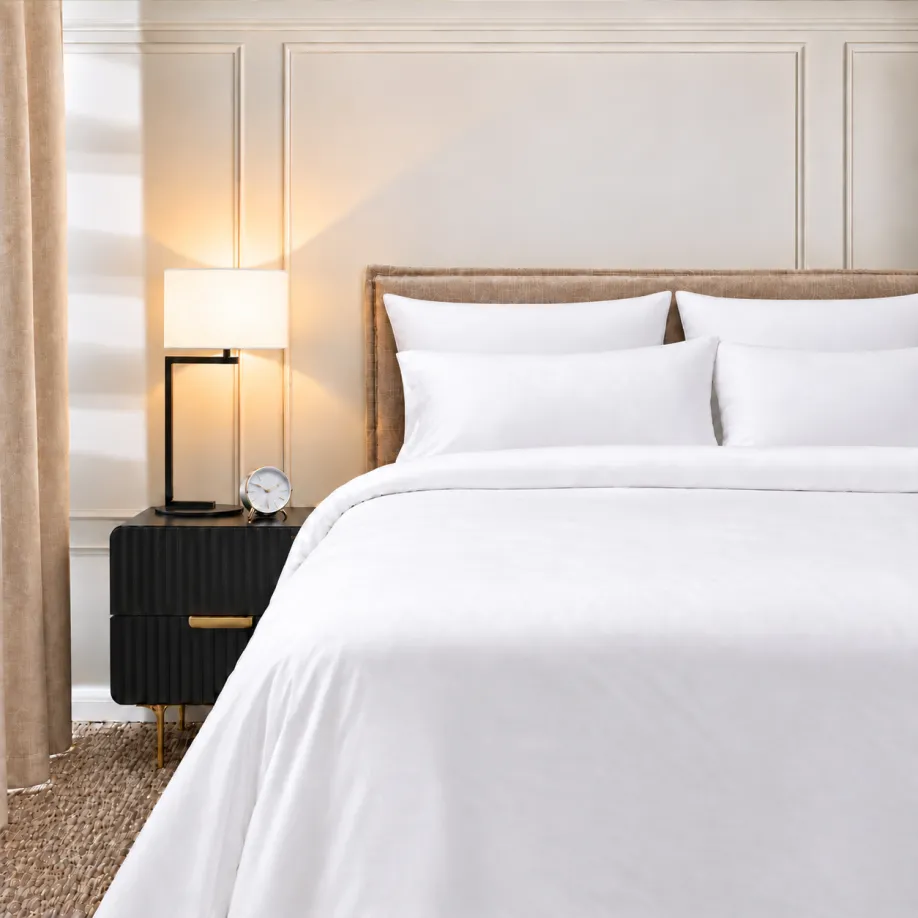
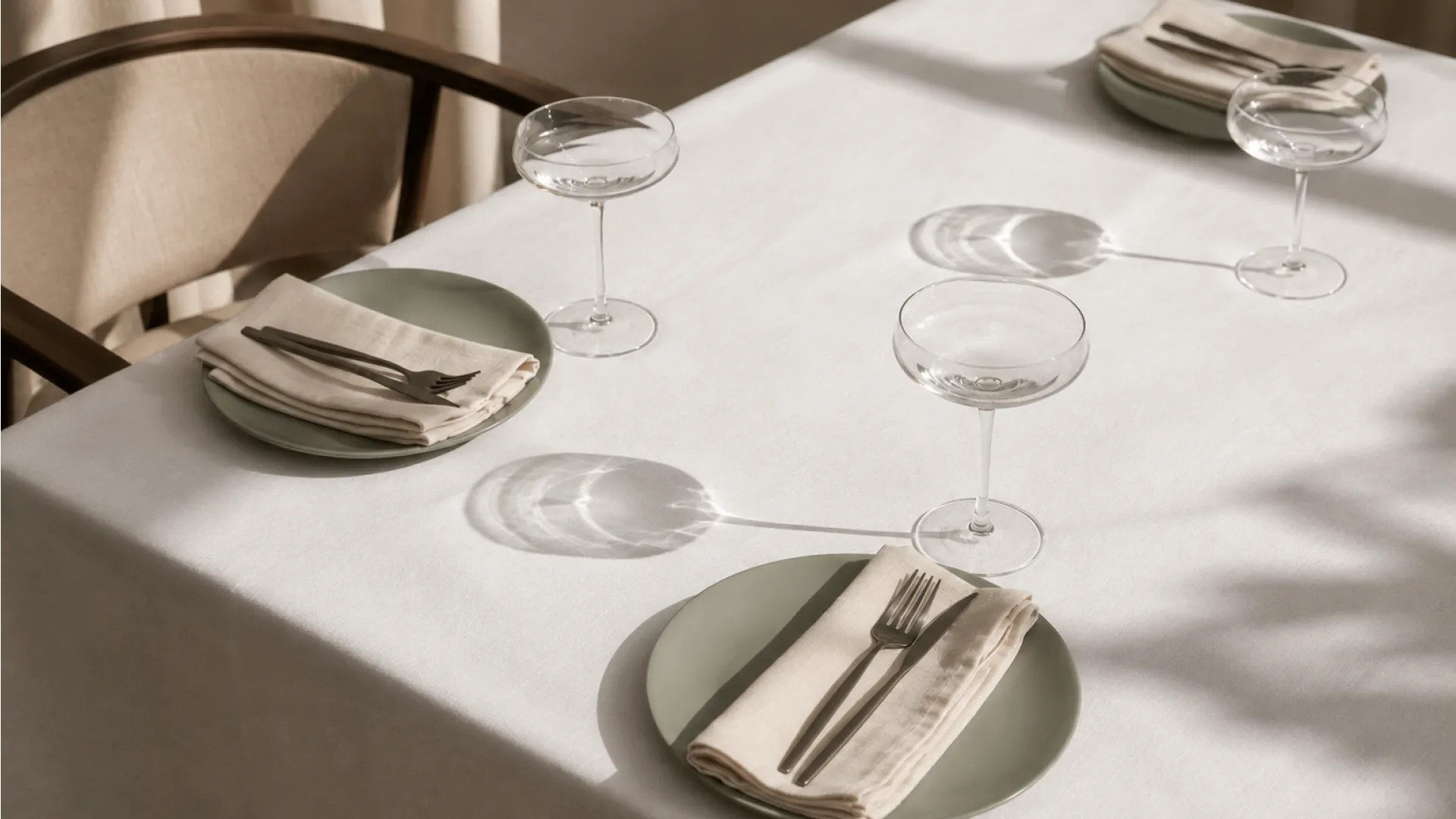
Table linen forms part of a venue’s presentation and can influence how guests perceive the dining environment.
Depending on the service style, products may include:
- Tablecloths
- Napkins and serviettes
- Placemats
- Table overlays
- Function linen
- Specialty dining products
Product selection should balance appearance with durability and commercial laundering performance.
A fine-dining restaurant may require a different presentation from a casual venue, club dining room, conference centre or high-volume function space. Colour, fabric, size and finish should therefore be selected around the venue rather than applying a single range to every setting.
A managed linen supply and management service can coordinate product supply, laundering, replacement and delivery according to the agreed program.
Kitchen and food-service products
Commercial kitchens rely on a steady flow of fit-for-purpose products throughout preparation, cooking and service.
These may include:
- Tea towels
- Glass cloths
- Food-service wipes
- Aprons
- Oven cloths and oven protection
- Chef jackets and trousers
- Kitchen uniforms
- Cleaning cloths
- Mops and reusable cleaning products
The required quantities will depend on the number of employees, meal volumes, service periods and frequency of collection.
Insufficient stock can disrupt food preparation and cleaning routines. Excess stock can take up valuable storage space or make inventory more difficult to control.
Products should be selected for their intended use and kept within the correct operational stream. Clear separation and collection processes can help prevent dining, kitchen and cleaning products from being mixed or used in the wrong area.
Uniforms for front-of-house and kitchen teams
Employee presentation contributes to the overall guest experience.
Hospitality uniform programs may include garments for:
- Front-of-house teams
- Food and beverage employees
- Chefs and kitchen staff
- Bar teams
- Function employees
- Cleaning teams
- Maintenance employees
- Supervisors and managers
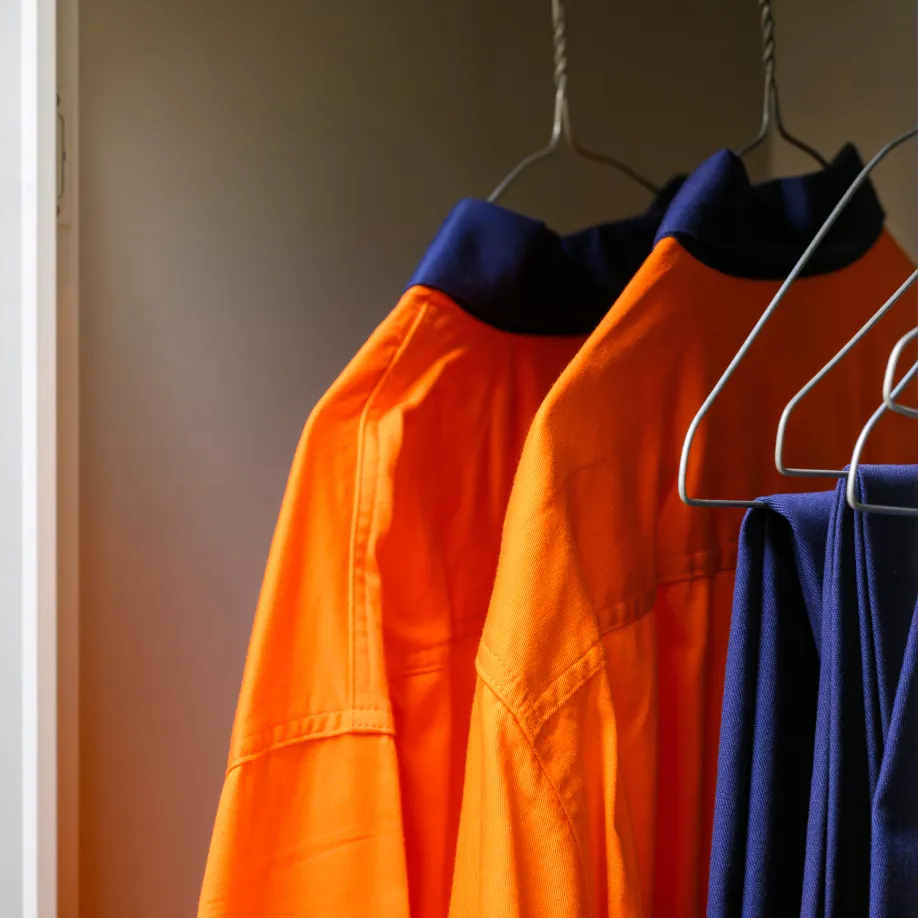
A managed garment and workwear service can coordinate garment supply, employee allocation, collection, laundering, repairs, replacement and delivery.
Uniform selection should consider:
- Employee role
- Venue presentation
- Comfort and fit
- Movement and physical tasks
- Kitchen temperatures
- Garment-change frequency
- Commercial laundering performance
- Branding requirements
- Seasonal workforce changes
Garment allocations can be reviewed as employees join, leave or move between roles. Depending on the program, barcodes or RFID may also provide greater visibility over allocation and garment movement.
Floor-care and cleaning products
Hospitality venues need to maintain both customer-facing and back-of-house areas.
Cleaning, floor-care and washroom products may include:
- Microfibre cloths
- Mops
- Entrance mats
- Safety mats
- Anti-fatigue mats
- Full-rubber mats
- Roller towels
- Related washroom products
Entrance mats can help capture dirt and moisture brought into a venue, supporting presentation in foyers, reception areas and dining spaces.
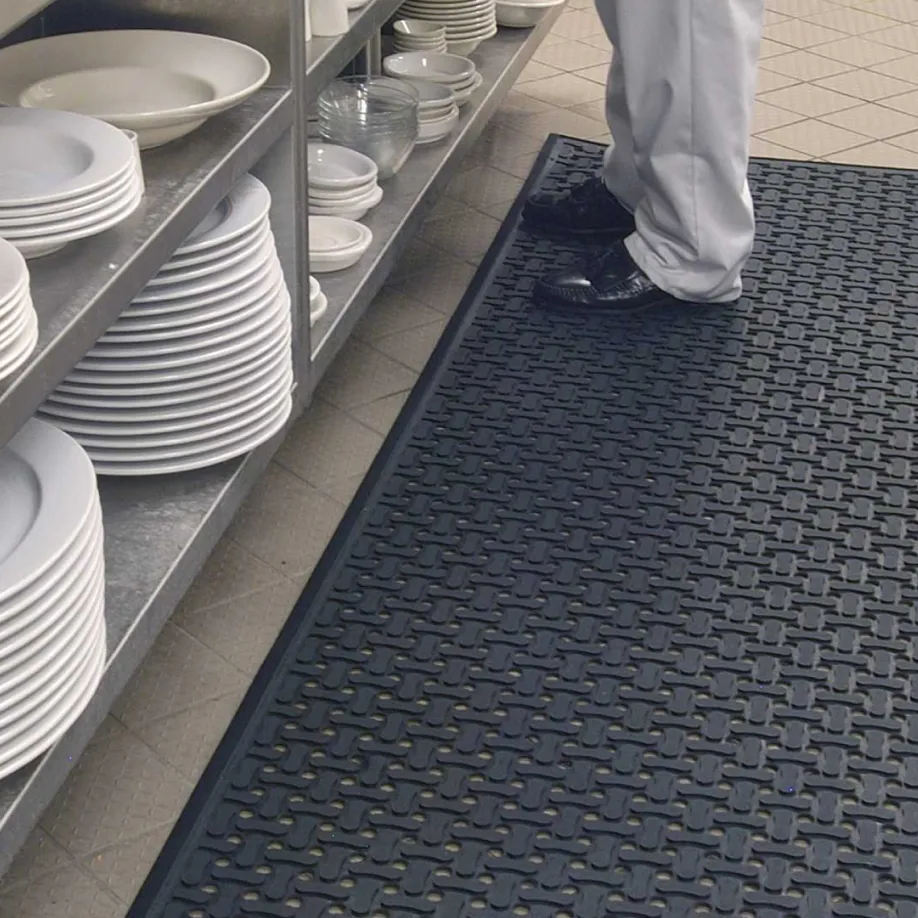
Safety or rubber mats may suit selected kitchen, bar and wash-up areas exposed to water or spills. Anti-fatigue mats may be considered at workstations where employees stand for extended periods.
Each product should be selected around the actual workplace area. A mat used at a customer entrance will have different requirements from one placed behind a bar or in a commercial kitchen.
Floor-care products should also form part of regular cleaning and inspection processes. They do not replace appropriate spill management, flooring maintenance or workplace risk controls.
Washroom products and shared spaces
Guest washrooms and employee amenities contribute to how visitors and staff experience a venue.
Depending on the operation, a coordinated service may include roller towels and related washroom products alongside mats and reusable cleaning products.
Bringing these products into a broader hospitality program can:
- Simplify ordering
- Reduce the number of separate suppliers
- Support regular servicing
- Improve product availability
- Provide clearer responsibility for replacement
- Reduce administration for venue teams
The service schedule should reflect usage. A small restaurant may have different requirements from a busy club, stadium, function centre or entertainment venue.
How are hospitality linen quantities determined?
Appropriate linen quantities depend on how the venue operates.
Factors can include:
- Number of tables and covers
- Average daily service volume
- Number of meal periods
- Function and event schedules
- Table-turn frequency
- Kitchen output
- Employee numbers
- Garment-change requirements
- Collection and delivery frequency
- Laundry turnaround time
- Storage capacity
- Seasonal and peak-period demand
- Contingency requirements
A fixed quantity that works during quieter periods may not be sufficient for weekends, major events or seasonal peaks.
Stock levels should be reviewed using actual usage information rather than assumptions alone. Regular stocktakes and operational reviews can identify products that are underused, overstocked or failing to return through the collection process.
Responding to functions and seasonal demand
Hospitality demand can change quickly.
Restaurants and venues may experience additional requirements due to:
- Weddings and private functions
- Conferences
- Sporting events
- Concerts and entertainment
- Holiday periods
- Outdoor dining
- New menu or service formats
- Temporary staff increases
- Venue expansion
A hospitality linen provider should explain how quantity changes are requested, what lead times apply and which products are subject to availability.
Forward planning is particularly important for large functions and specialised linen. Standard products may be easier to increase at short notice than custom colours, sizes or venue-owned ranges.
Rental versus customer-owned hospitality linen
Restaurants and venues can use rental linen, customer-owned products or a combination of both.
Rental linen
Under a rental model, the service provider supplies and manages the agreed linen range.
This may reduce the initial investment required to purchase a complete inventory and simplify the replacement of worn products under the terms of the service agreement.
Rental can be suited to frequently used products such as:
- Standard tablecloths
- Napkins and serviettes
- Tea towels
- Glass cloths
- Kitchen products
- Selected uniforms
Customer-owned linen
A venue may prefer to purchase its own linen when a specific colour, design, fabric or brand presentation is required.
Suitable customer-owned products can often be incorporated into a commercial laundry program. The provider should assess the construction, fabric and care requirements before confirming the processing arrangement.
The venue remains responsible for the initial investment and ongoing replacement of worn, damaged or lost items.
Hybrid linen programs
A hybrid program can combine rental products for high-volume everyday use with customer-owned products for signature dining areas, events or branded experiences.
Clear identification and stock controls are important when rented and customer-owned products are managed within the same service.
Commercial laundering and quality control
Hospitality products can encounter food, beverages, oils, moisture and heavy day-to-day use.
A commercial laundry service should apply processes appropriate to each product and its intended use.
A managed process may include:
- Collection of used products
- Sorting by product and processing requirements
- Commercial laundering
- Finishing and inspection
- Removal or reprocessing of unsuitable items
- Folding, packing or hanging
- Scheduled delivery to the venue
Table linen, kitchen products, uniforms, cleaning products and mats may require different processing streams. The provider should explain how products are sorted and managed throughout the laundry cycle.
Quality should be considered across appearance, cleanliness, product condition and consistency—not only whether the product has been washed.
Managing linen loss
Hospitality linen can be lost when products are:
- Discarded with food or general waste
- Mixed into incorrect collection streams
- Retained in kitchens, bars or function rooms
- Transferred between departments
- Sent off-site
- Stored in unrecorded locations
- Used for unintended cleaning tasks
Linen-loss controls may include:
- Clearly labelled collection points
- Suitable bags, bins and trolleys
- Separation from general waste
- Defined product-use guidelines
- Regular stocktakes
- Usage reporting
- Department-level reviews
- Staff education
- Investigation of recurring variances
The aim is to understand where products are moving and identify operational changes that may reduce unnecessary replacement costs.
Collection and delivery arrangements
Hospitality services should operate around the venue rather than disrupting it.
Collection and delivery schedules may need to consider:
- Trading hours
- Kitchen service periods
- Loading-zone access
- Noise restrictions
- Storage capacity
- Weekend and public-holiday requirements
- Function schedules
- Internal distribution processes
Where possible, deliveries may be scheduled during quieter periods or outside peak service times.
The venue should also understand where clean products will be delivered, where used products will be collected and who is responsible for internal distribution.
Supporting entertainment and multi-purpose venues
Entertainment venues, clubs, stadiums and function centres can include several hospitality environments within one location.
A single operation may contain:
- Restaurants
- Bars
- Function rooms
- Corporate suites
- Commercial kitchens
- Staff dining areas
- Public washrooms
- Customer-service areas
- Back-of-house workspaces
A coordinated program can support consistent product standards while allowing each area to maintain appropriate stock quantities and service arrangements.
For multi-site hospitality groups, centralised account management and consolidated reporting can also provide greater visibility across locations without requiring every venue to use identical stock or delivery settings.
How to choose a hospitality linen service near you
Proximity is useful, but the nearest provider may not necessarily offer the capacity, product range or support your venue requires.
When comparing hospitality linen services, ask:
- Which table, kitchen and food-service products are available?
- Can the provider manage both linen and uniforms?
- Are rental and customer-owned options available?
- How are stock quantities calculated?
- Can supply change for functions and seasonal peaks?
- How are products inspected after laundering?
- What happens to damaged or worn items?
- What reporting and stocktake support is available?
- Can the provider service all required locations?
- How are collection and delivery schedules determined?
- What happens if a delivery or supply issue occurs?
- Who will manage the account and review performance?
If you are comparing a restaurant linen service in Melbourne or another Australian location, review the provider’s service network and locations alongside its products, capacity and service model.
Building a hospitality linen program around your venue
The right hospitality linen program should reflect the way the venue operates.
Product selection, stock quantities, collection schedules and delivery arrangements should support daily trading while allowing the business to respond to functions, seasonal demand and changing service volumes.
A managed program can bring table linen, kitchen products, uniforms, floor care and washroom products together under a more coordinated service. This can reduce administration, improve visibility and help ensure the products needed for service are available at the right time.
Hospitality linen services from Ensign
Ensign supports restaurants, hospitality businesses and venues with managed linen, laundry, uniform and supporting product solutions.
Programs can include table and dining linen, kitchen products, staff garments, cleaning products, floor mats and washroom products.
Supply, collection, commercial laundering, delivery, stock management and reporting can be coordinated around the venue’s trading hours, service volumes and operational requirements.
A structured review can help identify the right products, stock holdings and service arrangement for an individual venue or multi-location hospitality group.
Request a hospitality linen review
Frequently asked questions
What are hospitality linen services?
Hospitality linen services coordinate the supply, collection, commercial laundering, delivery and management of products used by restaurants and venues. These can include table linen, kitchen products, uniforms, cleaning products and floor mats.
What linen does a restaurant need?
Requirements vary by service model but can include tablecloths, napkins, serviettes, tea towels, glass cloths, food-service wipes, aprons, chef garments and cleaning products.
Can a linen service support restaurant functions and seasonal demand?
Yes. Product quantities and service schedules may be adjusted to support functions and seasonal demand, subject to agreed lead times and product availability.
Can customer-owned restaurant linen be commercially laundered?
Suitable customer-owned linen can often be incorporated into a commercial laundry program. The provider should assess the fabric, construction, care requirements and expected processing performance first.
How much table linen does a restaurant need?
Required quantities depend on table numbers, daily covers, service periods, table-turn frequency, collection schedules, laundry turnaround time, functions and contingency requirements.
Can one provider manage linen across multiple hospitality venues?
Yes. Multi-site programs can combine centralised account management, consolidated reporting and consistent product standards with quantities and delivery schedules tailored to each venue.
How do I choose a restaurant linen service near me?
Consider the provider’s service coverage, available products, laundering capacity, delivery reliability, stock-management support and ability to respond to changing demand—not location alone.